David Hurn
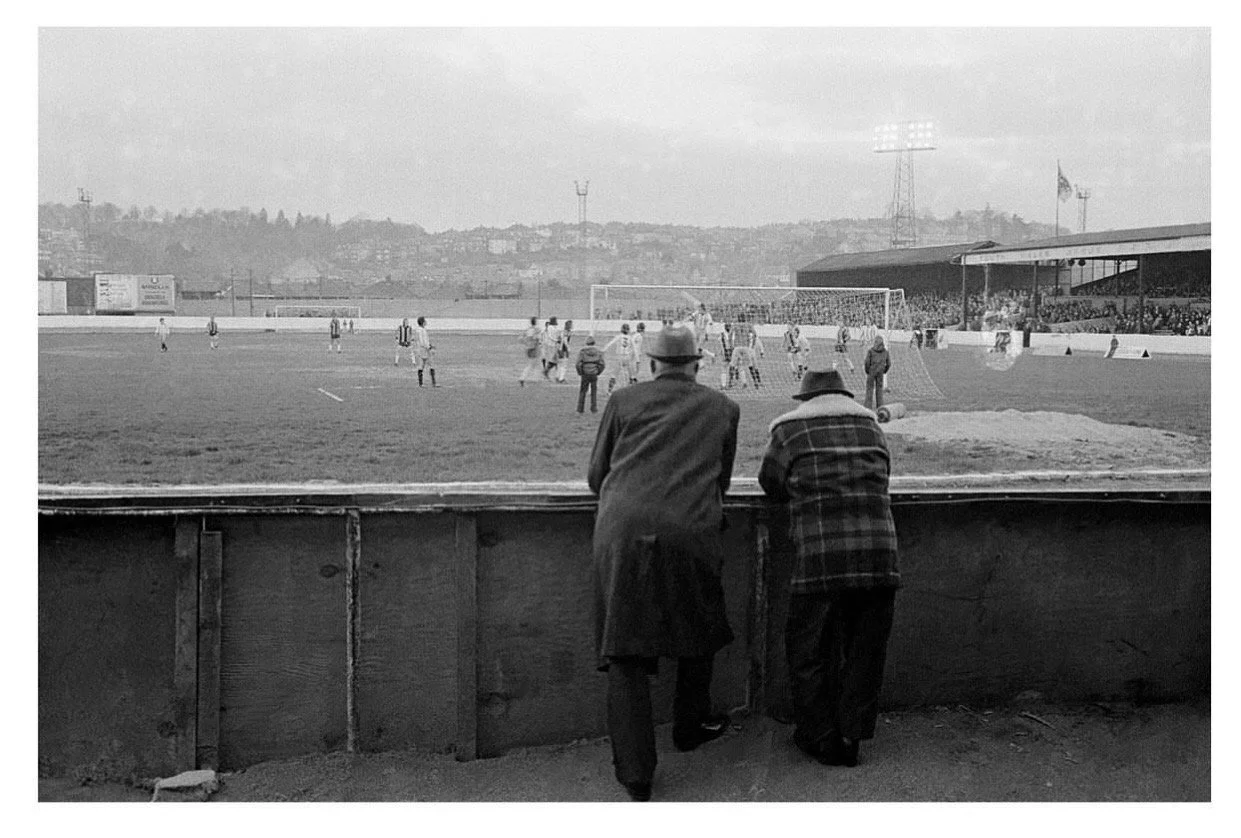
Newport County, Somerton Park, Newport, Wales. 1977.
Football is life, or so the mythology insists. Twenty-two players entertaining thousands every match day, tribal ritual and collective passion, an industry worth billions. But this isn't that football. This is Newport County in 1977, enduring their 15th consecutive season in the fourth tier of the Football League, in danger of dropping out altogether. This is football at the bottom, where the spectacle has drained away and what remains is ritual performed out of stubbornness, not glory.
Two figures stand apart from the crowd in the grandstand, watching. There's no action visible, no athletic prowess, no violent outbursts of emotion, no singing or chanting. Hurn hasn't captured any of the tropes associated with sports photography. What he's photographed instead is the ordinary reality of fourth-tier football: two men watching a match that might be poor, might be forgettable, might mean nothing beyond the fact that they're here, together, doing what they do every week because this is what you do.
It's 1977. Across Wales, the cracks in the nation's industrial base are beginning to show. The collapse is coming, pit closures and steel decline looming, but in 1977 it's still just visible on the horizon. Newport sits at the edge of the South Wales valleys, close enough to sense what's ahead. The football club is marginally ahead of the nation in its decline: struggling, underfunded, barely surviving in the fourth tier. The club prefigures what's coming for the communities around it. The ritual continues, but the ground is shifting.
Roland Barthes wrote that sport is the closest thing we have to combat or war, but he was writing about spectacle, about drama and catharsis. This photograph captures something else: the social infrastructure of football, the part that persists when the spectacle fails. Football is about connection and belonging, collective hope as release from individual weight. The two figures stand with the weight of the world on their shoulders, watching a fourth-tier match in a town on the edge of economic transformation, waiting for something, anything, to happen. Not for glory, but for momentary relief.
The mythology of football sells passion, excitement, unpredictability. The reality, especially at this level, is often waiting. Waiting for the ball to reach the net, waiting for the season to improve, waiting for something to change. But the ritual persists because football offers what little else does: a place to belong, a crowd of people with shared identity and history, a reason to gather every week and briefly forget everything outside the ground. Hurn has photographed the gap between what football promises and what it actually delivers at Somerton Park in 1977: not spectacle, but endurance. Not glory, but the stubborn refusal to stop showing up.
David Hurn (b. 1934) is a Welsh photographer and member of Magnum Photos, known for documenting Welsh life, culture, and communities.
More on Hurn: Magnum Photos
