SUSAN MEISELAS
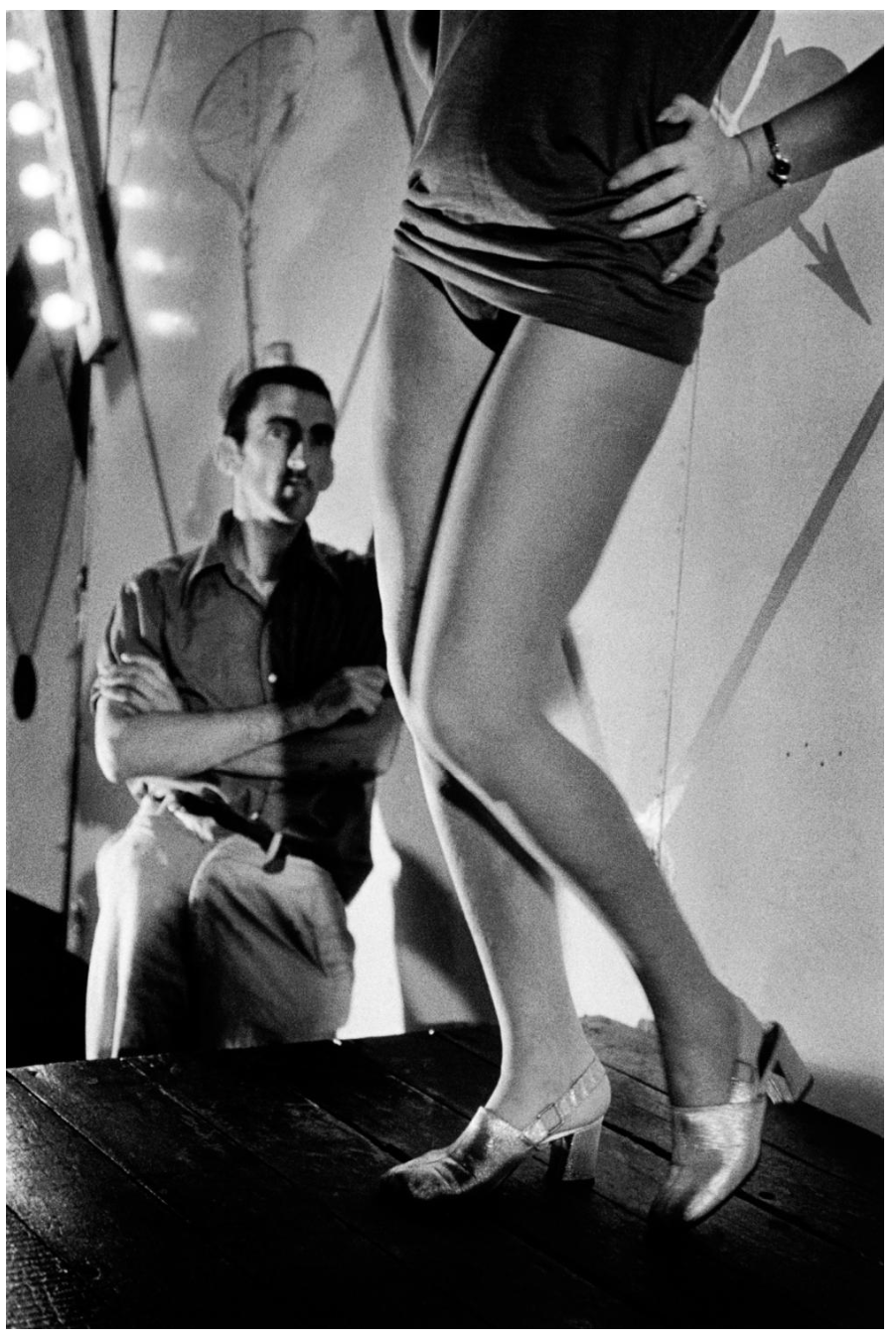
Gawker, Vermont, 1971
A man stands at the edge of the tent, staring in. Inside, a woman performs on a makeshift stage. His face is visible, caught mid-look, absorbed. He's watching, and Meiselas is photographing him watching. The female gaze observing the male gaze observing the female body. The photograph documents desire as transaction, looking as labour, entertainment as exploitation.
This is from Meiselas' Carnival Strippers series, photographed at agricultural fairs across Vermont, New Hampshire, and Pennsylvania between 1971 and 1975. Women performed striptease in tents at small-town carnivals, working-class entertainment sold alongside livestock competitions and fried food. Meiselas spent summers following the circuit, photographing the performers, the audiences, the economics of it. This wasn't reportage capturing a single event. This was documentary: sustained attention over years, building a portrait of a system.
The marketplace is visible. The tent, the stage, the man paying to look, the woman paid to be looked at. Desire is monetised, broken down into transactions. But Meiselas disrupts the exchange by photographing the man rather than the stripper. She denies the viewer what the gawker paid for. Instead, we see him: anonymous despite his visible face, caught in the act of looking. The photograph makes the consumer visible, the transaction explicit.
Agricultural fairs in rural Vermont in 1971 weren't elite spaces. These were farmers, labourers, men with limited income spending money to watch women undress in a tent. The strippers were working-class too: women travelling carnival circuits, performing multiple shows daily in temporary venues. Class shapes the entire scene. Women selling access to their bodies because options are limited, men buying that access because it's affordable. Gender and class intersect. The exploitation isn't abstract, it's economic.
Meiselas' position as female photographer matters. She wasn't one of the gawkers. She befriended the performers, travelled with them, documented their lives beyond the stage. But she also photographed the men, catching them in moments they didn't control. The male gaze, usually invisible because it's ubiquitous, becomes subject. Meiselas reverses the power dynamic: the looker becomes the looked-at.
The marketplace of exploitation operates at multiple levels. The carnival extracts labour and takes profit. The men consume the performance whilst remaining anonymous. But the women also exploit the men's desire, charging for access, controlling what's revealed. Everyone is trapped in the transaction. Meiselas' photograph doesn't moralise. It shows the machinery operating: desire monetised, looking commodified, bodies transformed into capital.
Susan Meiselas (b. 1948) is an American documentary photographer known for her work on human rights and conflict. Her Carnival Strippers series (1971-1975) examined the intersection of gender, class, and labour in travelling striptease shows across rural America.
More on Meiselas: Magnum Photos | Website
