Paul Cabuts
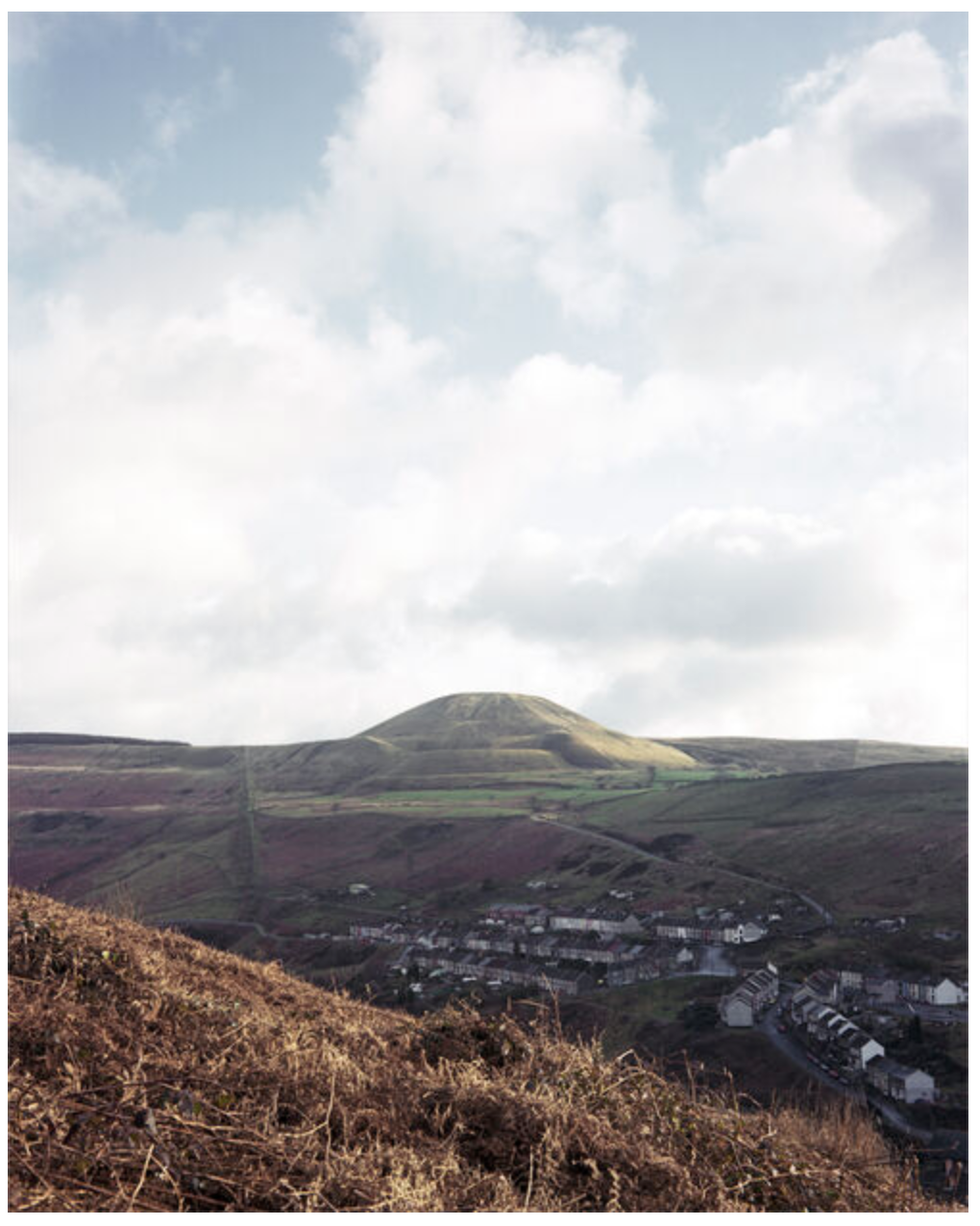
Tylorstown Tip, 1998
The Tylorstown tip rises above the valley, a monument to waste in a landscape of extraction. For decades it was known as "Old Smokey," hot ash from the power station and waste from the mine piled high above the town. Locals recall it glowing at night, a smouldering heap of industrial refuse looming over their homes.
By 1998, when Cabuts photographed it, the tip had been neutralised by time and vegetation. Nature has superficially reclaimed it, covered in green, trees growing across its slopes. It looks almost natural now, an accepted part of the landscape, perhaps even a place children played. But this is no mountain. It's waste, carefully disguised. The vegetation masks what lies beneath: decades of ash and spoil, compacted and unstable.
The houses of Tylorstown cling to the valley sides like limpets, deep in shadow, dwarfed by the tip that looms above them. The composition makes the relationship visible: the town exists beneath waste, literally overshadowed by the remnants of the industry that built it and then abandoned it. The tip dominates the frame, asserting its presence over everything below. Almost unseen because it's always there, visible from across the region yet so familiar it disappears into the landscape.
After Aberfan in 1966, when 144 people died as a colliery spoil tip collapsed onto a school, the Tylorstown tip was reduced in height. The disaster forced recognition that these monuments to extraction were also threats. But reduction isn't removal. The tip remained, and in 1998 it rests there still, vegetated and seemingly benign. Twenty-two years after Cabuts made this photograph, part of it would collapse during Storm Dennis in 2020. The threat was always present, just accepted, normalised, part of the view.
Cabuts's photograph captures a community living beneath industrial waste that was never removed, just left to sit above homes and lives. The green covering suggests the problem has resolved itself, that time and nature have made the tip safe. But underneath is ash and spoil, the material legacy of extraction that remains unstable, monitored, threatening. The tip was never meant to be permanent. It was expedience: pile the waste somewhere and move on. Except the waste doesn't disappear. It sits, vegetated and familiar, a monument not to industry's achievement but to what industry leaves behind when it's finished extracting profit.
Paul Cabuts is a Welsh photographer whose work documents the landscapes and communities of the South Wales Valleys.
